I Swapped My 3 P.M. Energy Crash for a Berberine-and-Cinnamon Routine — Here's What Happened
After years of mid-afternoon slumps and reaching for a third coffee, I spent eight weeks trying a traditional herb stack. Here's the honest, un-hyped version of how it went.

Updated this month · 9 min read
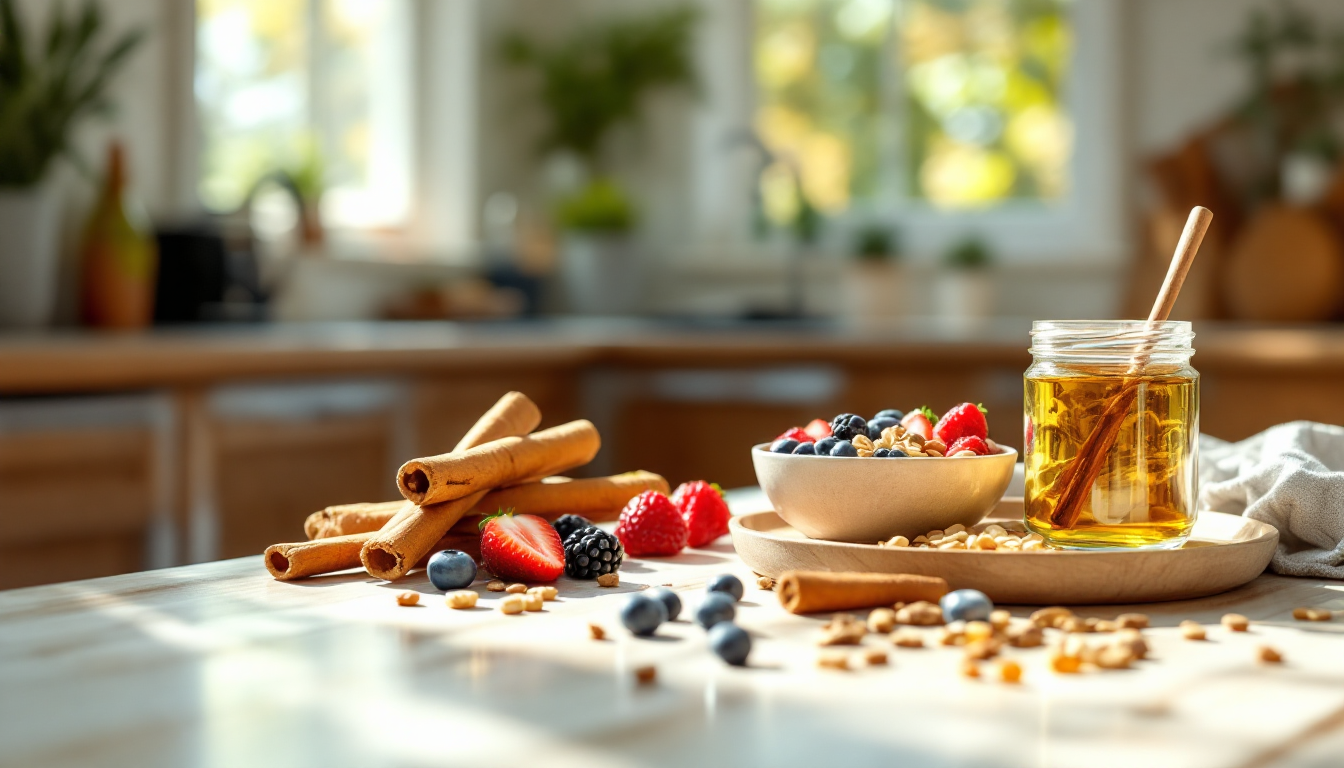
For most of my thirties, 3 p.m. was a wall. I'd be cruising through the workday and then — like clockwork — the focus would drain out of me, my eyes would get heavy, and I'd start bargaining with myself about whether a fourth coffee counted as "too much." It wasn't dramatic. It was just relentless. Every single afternoon, the same flat, foggy feeling.
I write about nutrition for a living, so I knew the usual culprits: a carb-heavy lunch, not enough protein or fiber, dehydration, the post-meal dip we all ride to some degree. I'd tightened up my eating and it helped at the edges. But I was curious about the herbal side of the conversation — the traditional botanicals people have leaned on for generations to support steady, even energy. That curiosity is what led me to GlucoBalance by LotusHerb, a blend built around berberine and Ceylon cinnamon.
Before I go further, the honest framing: this is a dietary supplement, not a medication, and I'm a writer, not a doctor. I'm sharing my own eight-week experience and what each herb in the formula is traditionally used for. Nothing here is a promise about your body. With that said — here's what I found interesting enough to keep going.
Want to read the formula for yourself before going any further?
See GlucoBalance on the official site You'll leave The Nutra Digest and visit LotusHerb.comWhy I looked at blood-sugar support at all
I want to be careful with language here, because this is where a lot of supplement marketing goes off the rails. My fasting numbers have always been fine. I wasn't trying to "fix" anything diagnosable, and I'd never suggest a supplement as a substitute for that conversation with your physician. What I was after was simpler and more everyday: that smoother, less spiky feeling through the afternoon. GlucoBalance is formulated to support healthy blood sugar already within the normal range and healthy glucose metabolism — a structure-and-function idea, not a treatment claim.
In my experience, the appeal of a stack like this is that it bundles several traditional ingredients that people have historically reached for one at a time. So I did what any nutrition nerd would: I read the label and looked up what each component is traditionally associated with. Here's that walk-through.
The herbs in GlucoBalance, one by one
Cornerstone
Berberine
Berberine is the headline ingredient and the one most people have heard of. It's a compound found in plants like goldenseal and barberry, and it has a long history in traditional Chinese and Ayurvedic practice. Today it's widely discussed among people interested in supporting healthy glucose metabolism. It's the reason a blend like this even exists, and it's why I wanted to try the routine in the first place.
Aromatic
Ceylon Cinnamon
Not the cinnamon in your cupboard — at least, probably not. Most supermarket cinnamon is cassia. Ceylon, the "true" cinnamon, is milder and is the form usually chosen for supplements because it's lower in coumarin. Cinnamon has been used for centuries and is commonly paired with berberine in formulas aimed at supporting healthy blood sugar already within the normal range. I'll admit the cinnamon angle is part of why the routine felt pleasant rather than clinical.
I wasn't chasing a number on a meter. I was chasing the feeling of getting to 3 p.m. without hitting a wall.
Traditional
Gymnema Sylvestre
Gymnema is a climbing plant native to India, and it carries one of my favorite bits of botanical trivia: its Hindi name roughly translates to "sugar destroyer," and chewing the leaf can temporarily mute your ability to taste sweetness. It has a long Ayurvedic tradition and shows up in many modern blood-sugar-support blends for exactly that heritage.
Trace Mineral
Chromium
Chromium is an essential trace mineral, which means your body needs small amounts of it and gets them from food. It's frequently included in glucose-metabolism formulas because of its role in normal macronutrient metabolism. It's one of the more "textbook" inclusions on the label — less exotic than gymnema, but it earns its spot.
Curious about the exact amounts of each herb?
View the full ingredient list Opens the official LotusHerb product pageBotanical
Bitter Melon
Bitter melon is exactly what it sounds like — a knobbly gourd that's a staple vegetable across Asia and is genuinely, memorably bitter. It has a deep place in traditional cooking and folk practice, and it's a common companion to berberine in blends like this one. If you've ever eaten it stir-fried, you know it doesn't do anything halfway.
Leaf Extract
Banaba Leaf
Banaba is a flowering tree from Southeast Asia, and its leaves have a long history of traditional use. It contains a compound called corosolic acid, which is why the leaf extract turns up in modern glucose-support formulas. It's one of the lesser-known names on the label, but it's a long-standing one in its home regions.
Antioxidant
Alpha-Lipoic Acid
Alpha-lipoic acid (ALA) is a compound your body actually makes in small amounts, and it functions as an antioxidant. It's popular in metabolic-support stacks and rounds out the formula on the "general cellular support" side rather than the herbal-tradition side. Think of it as the modern, lab-bench inclusion sitting alongside the old botanicals.
Seed
Fenugreek
Fenugreek seeds are a kitchen-and-medicine-cabinet crossover — a warm, maple-ish spice used across Indian and Middle Eastern cooking, and a traditional remedy with a very long pedigree. They're rich in soluble fiber, which is part of why fenugreek shows up so often in this category. It's the ingredient I was most familiar with going in, because it's already in my spice drawer.
Eight ingredients, most of them with centuries of traditional use behind them, in one capsule instead of eight jars on my counter.
How I actually used it — and what changed
I kept it boring on purpose, because boring is how you actually notice anything. I took GlucoBalance as directed, with food, and I didn't change anything else dramatic on purpose — same general diet, same walks, same too-much-coffee baseline (at first). I gave it the full eight weeks because, in my experience, supplements built on whole-food botanicals aren't switches you flip overnight.
Here's the honest report. The thing I noticed first wasn't dramatic energy — it was that my afternoons felt a little less like falling off a cliff and a little more like a gentle slope. By the back half of the routine, that 3 p.m. wall had softened into something I could walk through without a rescue coffee. I want to be clear about what that is and isn't: it's a subjective, personal, your-mileage-may-vary observation about how I felt. It is not a clinical result, and I'm not reporting any numbers, because I'm not making any number-based claims.
The cinnamon-forward routine also just became a nice ritual. Pairing the capsule with my actual habits — protein at lunch, a short walk after eating — made the whole afternoon feel more deliberate. I suspect the routine mattered as much as any single ingredient, and I think that's worth saying out loud.
If the formula looks like a fit for your own routine:
Check today's price See current pricing and options on LotusHerb.comWho it's for — and who should skip it
A good fit if you…
- Like the idea of traditional botanicals (berberine, cinnamon, gymnema) bundled into one daily capsule
- Want to support healthy blood sugar that's already within the normal range as part of a broader healthy-lifestyle routine
- Are willing to give a botanical routine several weeks rather than expecting an overnight switch
- Have already cleared new supplements with your doctor
Probably skip it if you…
- Are pregnant, nursing, or planning to be
- Take prescription blood-sugar medication or other medications — talk to your doctor first; ingredients like these can interact
- Are hoping a supplement will treat, cure, or replace care for a diagnosed condition (it won't, and it isn't meant to)
- Expect guaranteed results — no honest supplement can promise those
That's the core of it. I went in skeptical — it's my job to be — and I came away thinking GlucoBalance is a sensible, thoughtfully bundled version of a herb stack a lot of people are already curious about. It didn't perform miracles, because supplements don't, but the eight-week routine fit easily into my day and the afternoons got a little kinder. For me, that was enough to be glad I tried it.
Ready to take a closer look at the full formula and label?
See GlucoBalance on the official site Opens LotusHerb.com in a new view